Choosing Mediation Over Litigation: Building Bridges for Successful Conflict Resolution
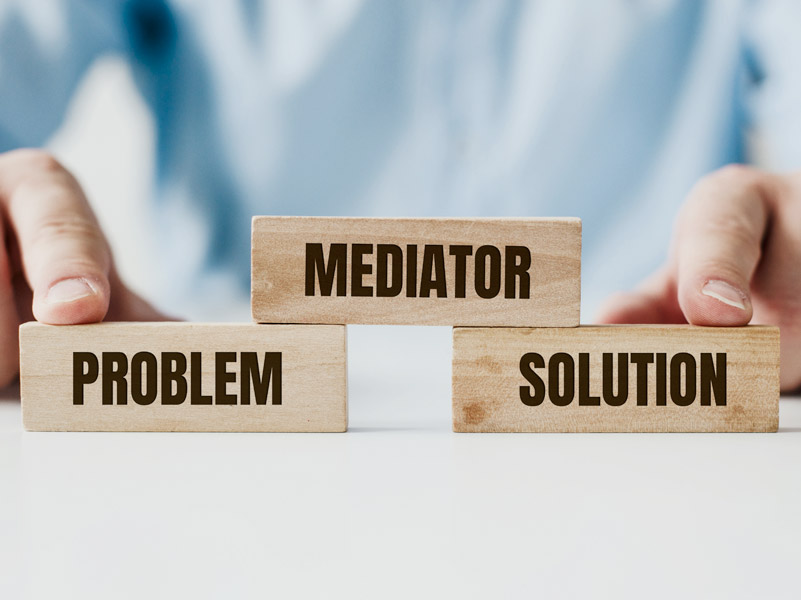 |
| Courtesy of the European Association of Lawyers |
Introduction
You most certainly have heard the term mediation mentioned at some point in your life. You most certainly also have a clue of
what it entails. So, defining it is not a hard task. However, when most people
think of mediation, they think it’s a complex process. The first thing that
comes to mind when the term mediation is mentioned is the 2007 post-election
violence in Kenya when Kofi Annan sought to bring peace to the country.
If that situation is what most people associate
mediation with then it would seem to be that mediation is a complex process.
Most people would even assume that the process is costly. This means that most
people would shy away from mediation. Taking note of this, this article seeks
to explain mediation in the simplest way possible. It also answers the most
frequently asked questions on mediation to help the reader fully comprehend
what mediation entails.
- Defining Mediation
There isn’t a universally agreed definition of
mediation just like there isn’t a unanimously approved definition of what law
is. However, there are several definitions of mediation which all seek to
define it in the most comprehensible way possible. Mediation can be described
as the process through which a third party assists disputants in working
together to craft a solution that each side values. It is a continuation of the
negotiation process with the aid of a third party.
Mediation,
according to Bercovitch, is a method of conflict management where conflicting
parties gather to seek solutions to the conflict, with the assistance of a
third party who facilitates discussion and the flow of information, aiding in
the processes of reaching an agreement (Bercovitch, 2007).
A finer
definition of meditation can be found in the Civil Procedure Act of Kenya which
defines mediation as, “an informal and
non-adversarial process where an impartial mediator encourages and facilitates
the resolution of a dispute between two or more parties, but does not include
attempts made by a judge to settle a dispute within the course of judicial
proceedings related thereto”. In conclusion, all these definitions agree
that mediation is a negotiation process in which disputants are assisted to
reach an amicable settlement by a third party known as a mediator (Kariuki
Muigua, 2017).
- Why Mediation is an Effective ADR Process
As mentioned earlier, mediation is a continuation of
the negotiation process but with the help of a third party. Mediation is an advancement of negotiation
and as such a more effective ADR process. The mediator’s presence assists the
negotiation process in the following ways:
● Being a neutral party, the
mediator helps the parties present each of their cases more effectively to the
other side.
● The mediator applies
several mediation skills that enable him/her diffuse strong feelings such as
anger or pride that would have otherwise stalled the negotiation process.
● Proposals offered by the
mediator can be deemed to be more attractive than an offer made by the other
party. This is because arguments made by one side are automatically
psychologically devalued by the other side, a process known as ‘reactive
devaluation’ (Blake, Browne & Sime, 2010).
● The mediator employs
different negotiation styles and tactics that help the parties get past the
deadlock created by the purely positional or competitive negotiation which
eventually leads to a settlement.
● Mediators create a balance
between the different personalities and negotiating styles of the parties and
minimize the pressure one party can feel when the other side exerts a confrontational,
positional negotiating style (Blake, Browne & Sime, 2010).
● A mediator encourages a
detailed and honest assessment by each party of the strengths and weaknesses of
their case.
● Mediation introduces an
element of detachment from the negotiation process and the mediator’s presence
prevents confrontation and the immediate response that occurs in face-to-face
negotiation between the parties.
● The mediator’s attributes
such as empathy, ability to listen, patience, good communication skills, and
impartiality all work together to help the parties review and re-evaluate their
case.
● Mediators tend to be
highly skilled at understanding the needs, interests, and positions of the
parties and at guiding them toward a settlement they can live with (Blake,
Browne & Sime, 2010).
- The Informality of Mediation
Mediation has been practiced since ancient times
(Kane, 2005). It is hard to trace when mediation came to life. It could be said
that mediation has been there since the beginning of time. Thus, it even
existed before other alternative dispute-resolution mechanisms. The informality
of mediation is traced from it being a day-to-day activity.
It is a problem-solving tool that is used in many
informal situations. Most people do not realize that just being impartial parties
seeking to solve domestic disputes makes them mediators. The same applies to
the parties who are in disagreement. The moment they let a third party help
them solve the problem, they become parties to mediation.
With this in mind, it can be concluded that mediation
is informal. Even with court-annexed mediation which will be discussed in the
next section, the process is still informal. It may bow down to some procedural
formalities but it's mostly informal. Parties should be urged to submit
disputes to mediation with the mentality that it's just another domestic
problem-solving process since it's not so different from the day-to-day
mediation witnessed in domestic settings such as families and friendships.
Conclusion
Mediation distinguishes itself from other alternative
dispute-resolution techniques in that it helps mend relationships. On top of
that, it saves time and money. Additionally, it is an informal process that
ensures the parties freely air out their issues without the threat of a binding
outcome. Mediation also seeks to get to the root of the issue, which may not be
the case with other ADR methods. Once the principal cause is determined, the
dispute is mostly extinguished since the parties, with the help of a mediator, find a solution to the problem. It goes without saying that mediation is a very
effective method of dispute resolution since the advantages outweigh the
disadvantages.
By Tiffany Mutie


Amazing
ReplyDelete